Designing a Structured Networking Experience
to Retain an Enterprise Client
Company
Ten Thousand Coffees (10KC)
Role
Lead Product Designer (Solo Senior)
Timeline
2 months
Stakeholders
Reported to VP of Design; Partnered with CTO, CSM’s & Product Manager
Scope
Enterprise SaaS platform used by large organizations to facilitate mentoring, networking, and knowledge sharing among employees.
Project Goal
Design a new product capability that would allow enterprise clients to facilitate more structured networking between specific groups of employees, a need that the existing platform could not support.The project was initiated because a major enterprise client was considering leaving the platform, and solving this problem was critical to retaining their business.
Impact
- 100% client retention (1,000+ seats secured)
- Preserved trust with a top enterprise client and protected recurring revenue
- Introduced a scalable framework later adopted across the platform
- Delivered a solution requiring near-zero retraining for client admins
The Challenge
The Problem: 10KC’s "Networking" program was a "black box"—it was company-wide, automated, and had no user interface. Our largest client needed the opposite: a highly organized, hub-specific way for employees to connect. If we couldn't provide this level of granularity, we risked losing their business for the upcoming year.
The "Impossible" Mandate: The leadership team was transparent: "This solution doesn't exist. We need you to figure out how it works, how it looks, and how to build it before the contract expires."
The Constraints:
Zero UI Foundation: Networking had no existing screens to iterate on.
The Clock: We had 60 days to move from "concept" to "functioning feature."
Technical Debt: We couldn't afford a total platform rebuild.
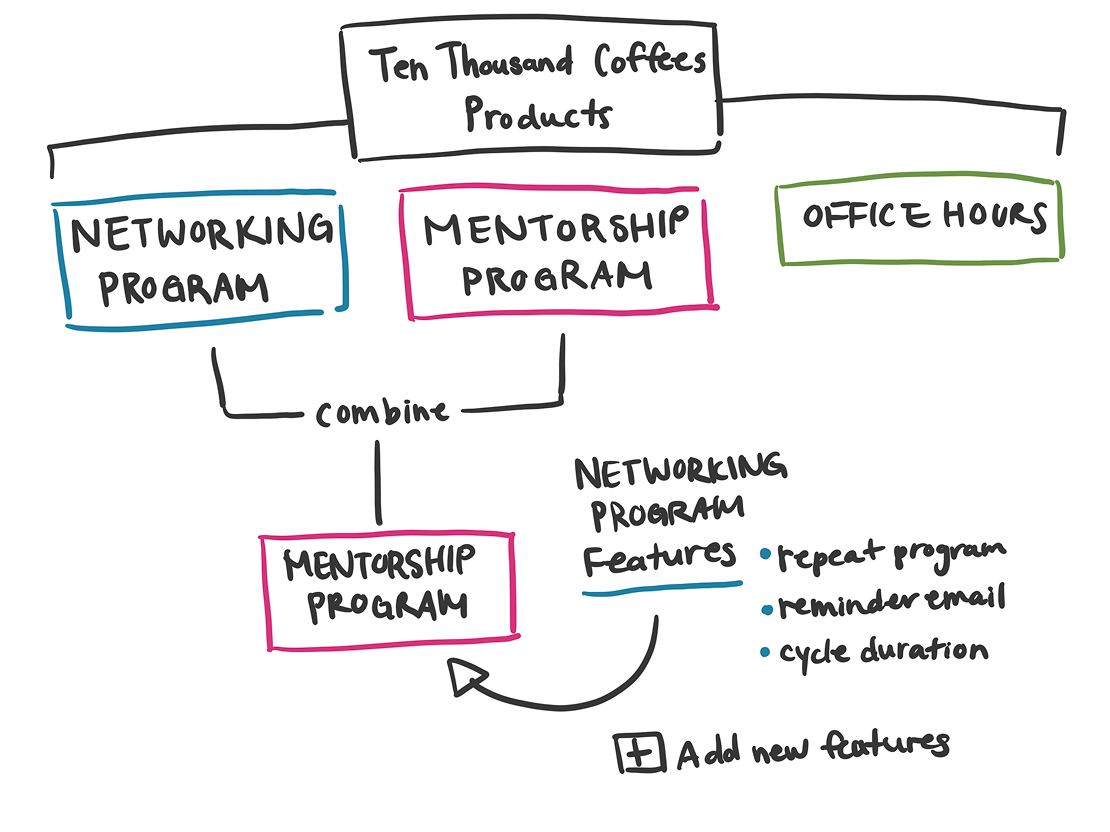
Understanding the Programs
10KC offers two core ways for employees to connect:
Networking Program
Designed for spontaneous, casual connections. Employees are randomly paired across the company for informal conversations, with no control over who they’re matched with.Mentorship Program
A structured experience where employees are intentionally paired (mentor + mentee) and follow a guided schedule with defined goals.
Key Difference:
Networking is random and unstructured, while mentorship is intentional and configurable.
Approach 2 diagram
The Strategy
To solve this, I conducted a deep-dive competitor analysis and interviewed our Customer Success Managers (CSMs) to map out every "must-have" for the client.
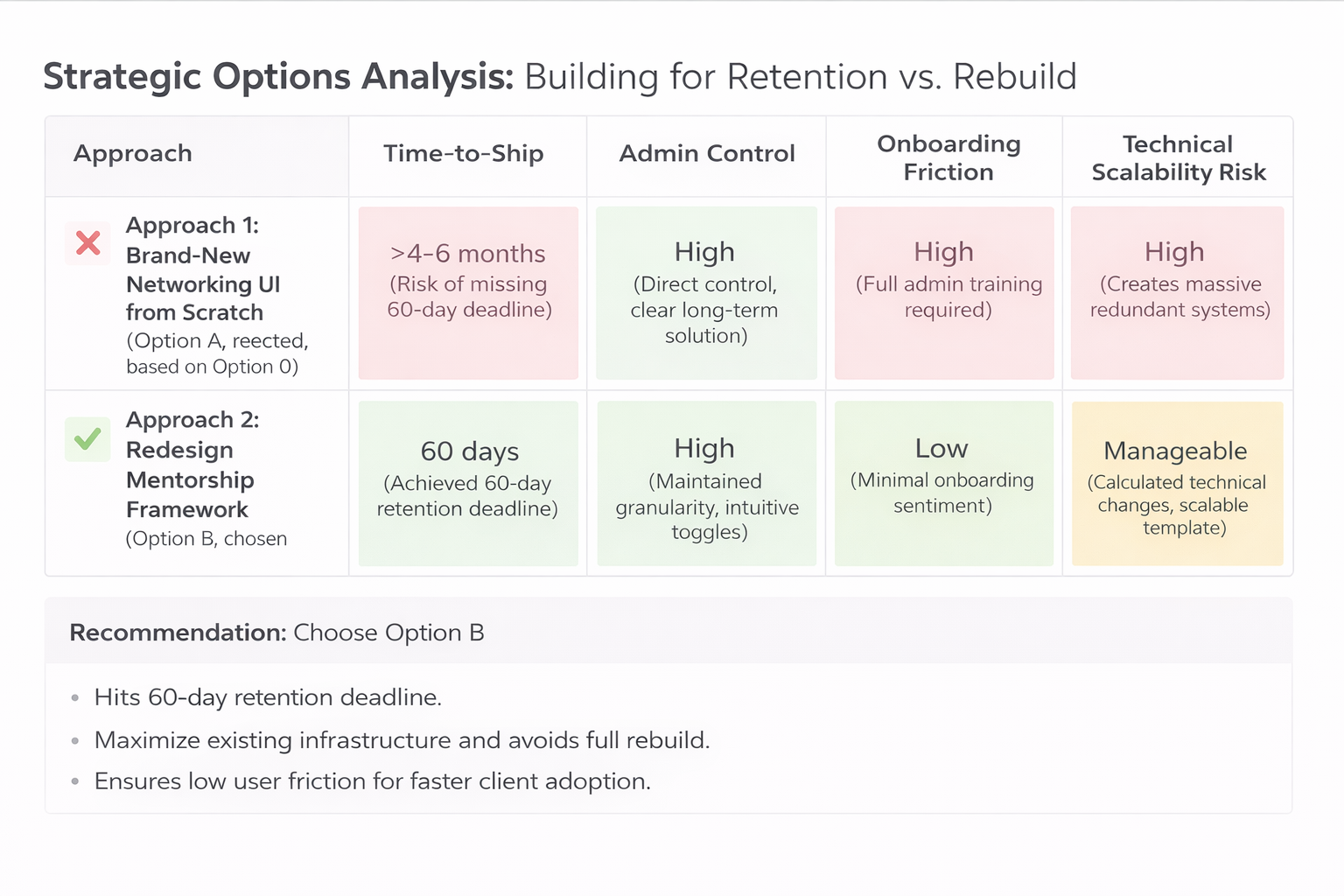
The Pivot: I was faced with two paths.
Approach 1: Build a brand-new Networking UI from scratch.
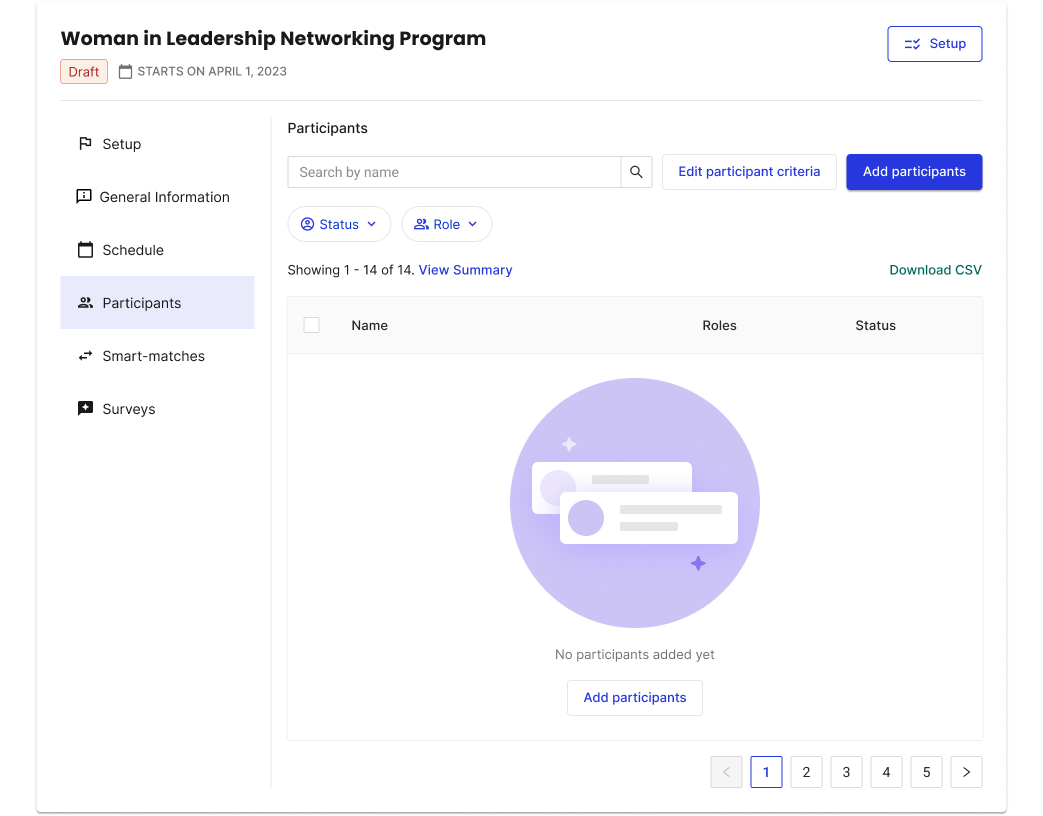
Approach 2: Redesign the existing Mentorship framework to support Networking features.
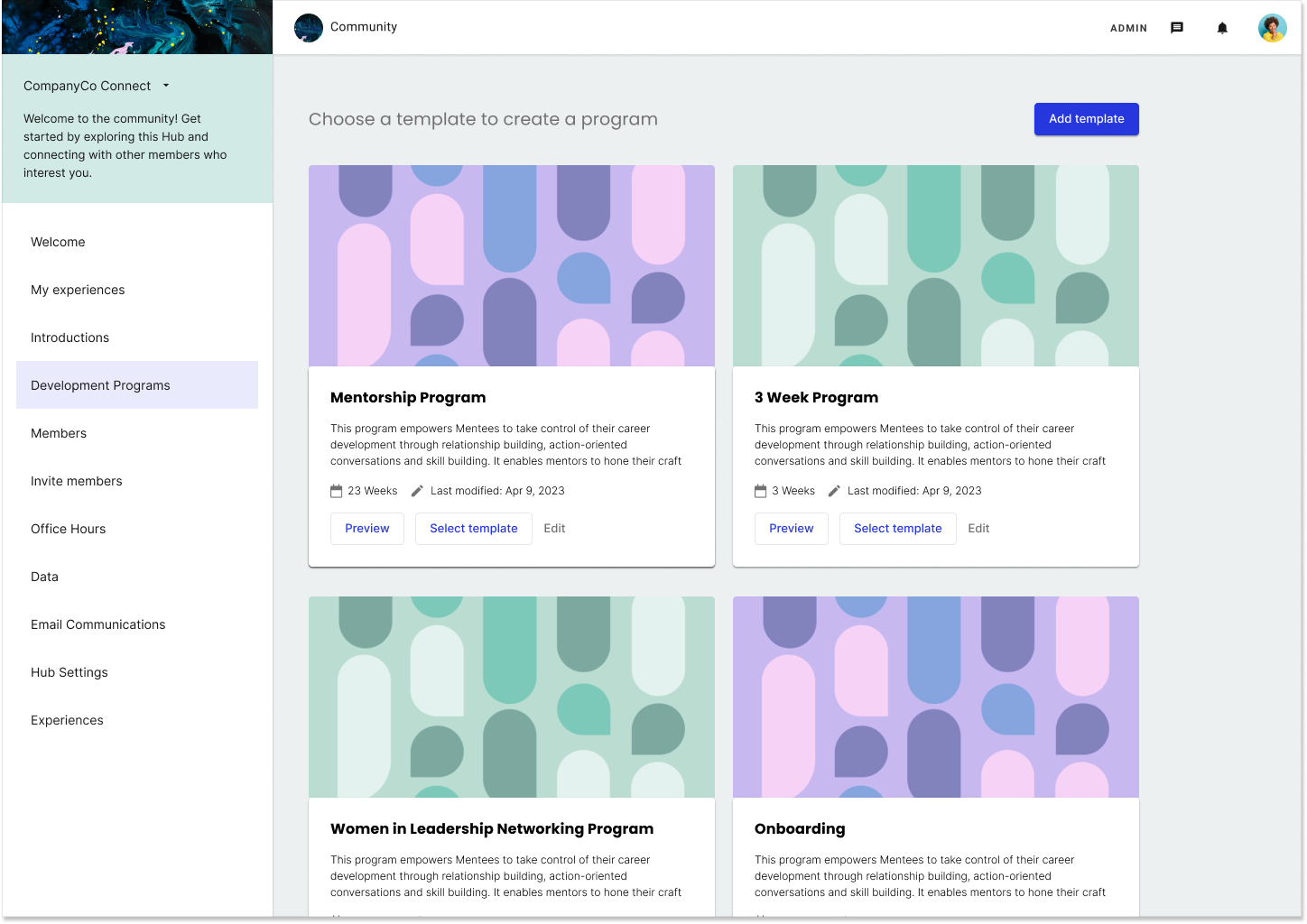
I advocated for approach 2 to the CTO. Based on my research, this wasn't just the faster route—it was the most scalable. By leveraging our existing Mentorship infrastructure, we could present a functional solution before the contract expired while creating a template that could be sold to future enterprise clients.
"I convinced the leadership team that by 'doing surgery' on our current organs rather than building new ones, we could deliver a high-value product that felt familiar to users but functioned with entirely new power."
Craft & Execution
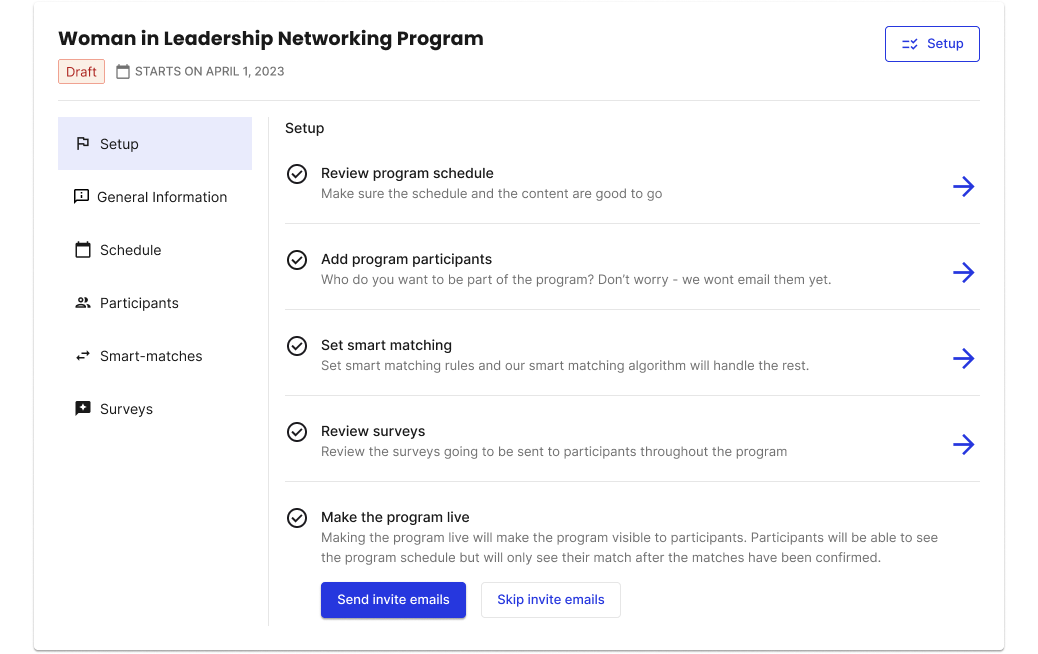
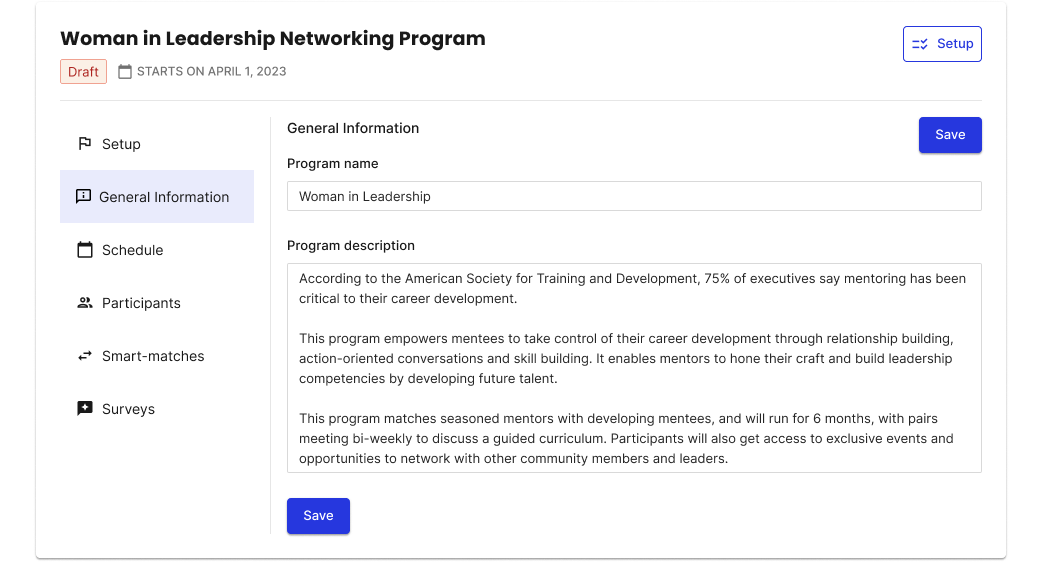
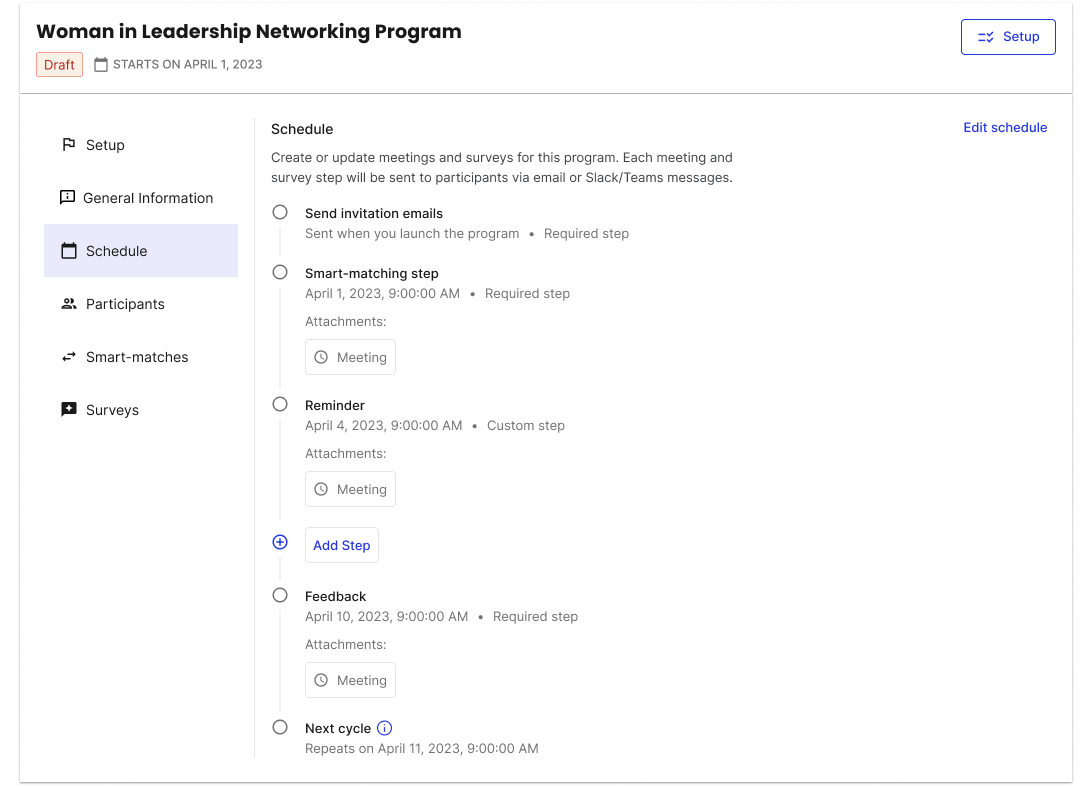
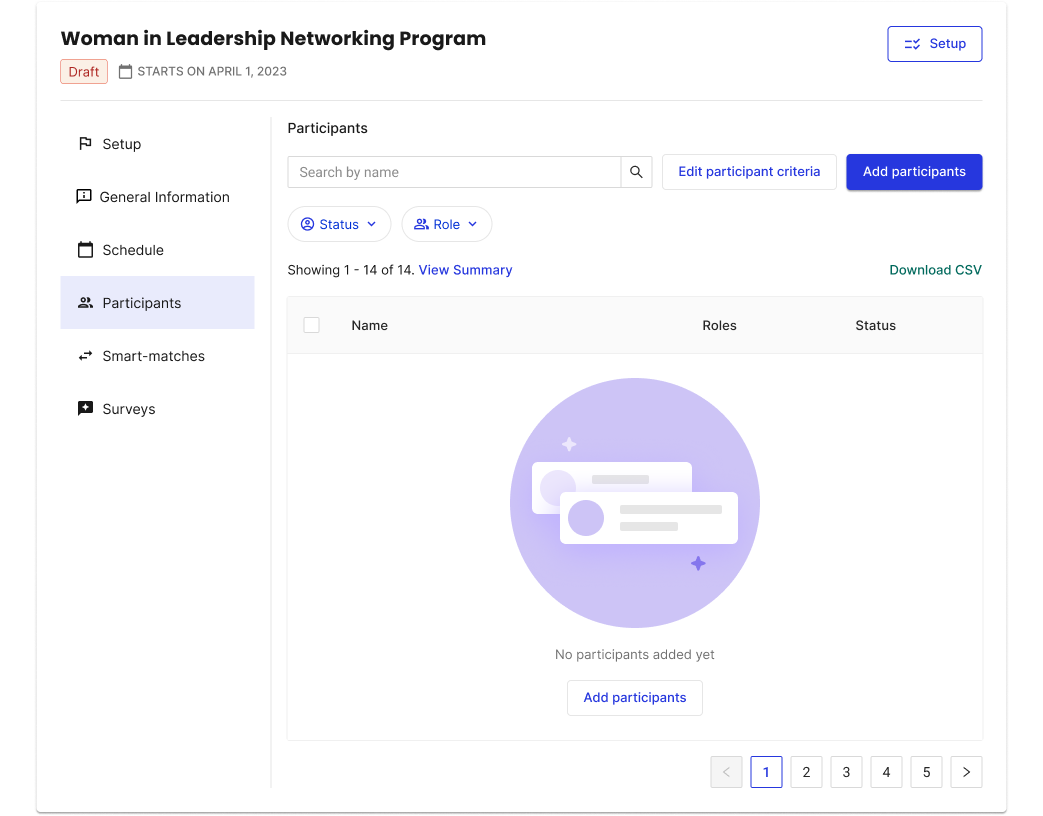
Design Principle: Radical Familiarity When introducing major platform changes under a tight deadline, you cannot afford a learning curve. I focused on a "Drawer" UI pattern within the existing Schedule view.
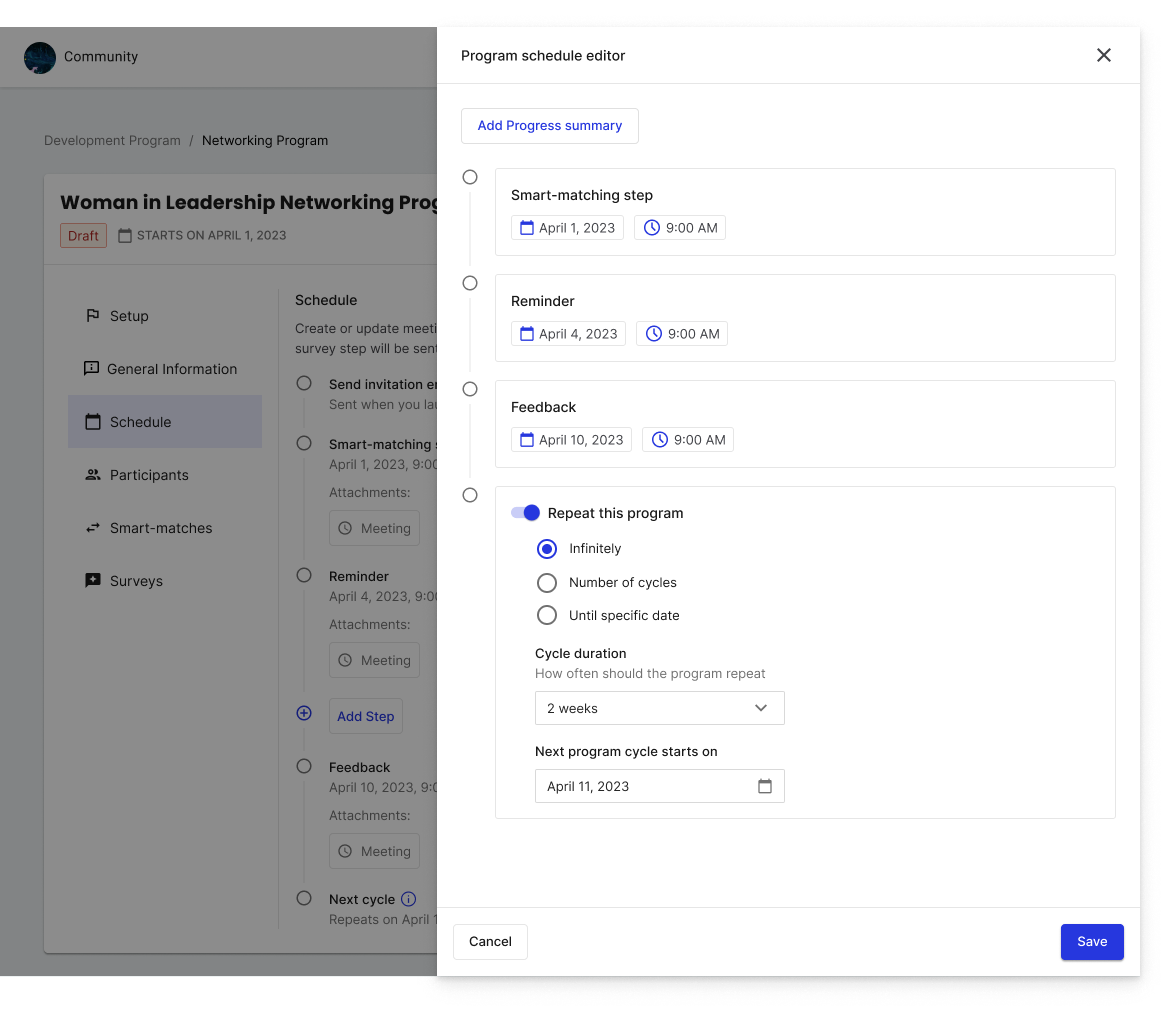
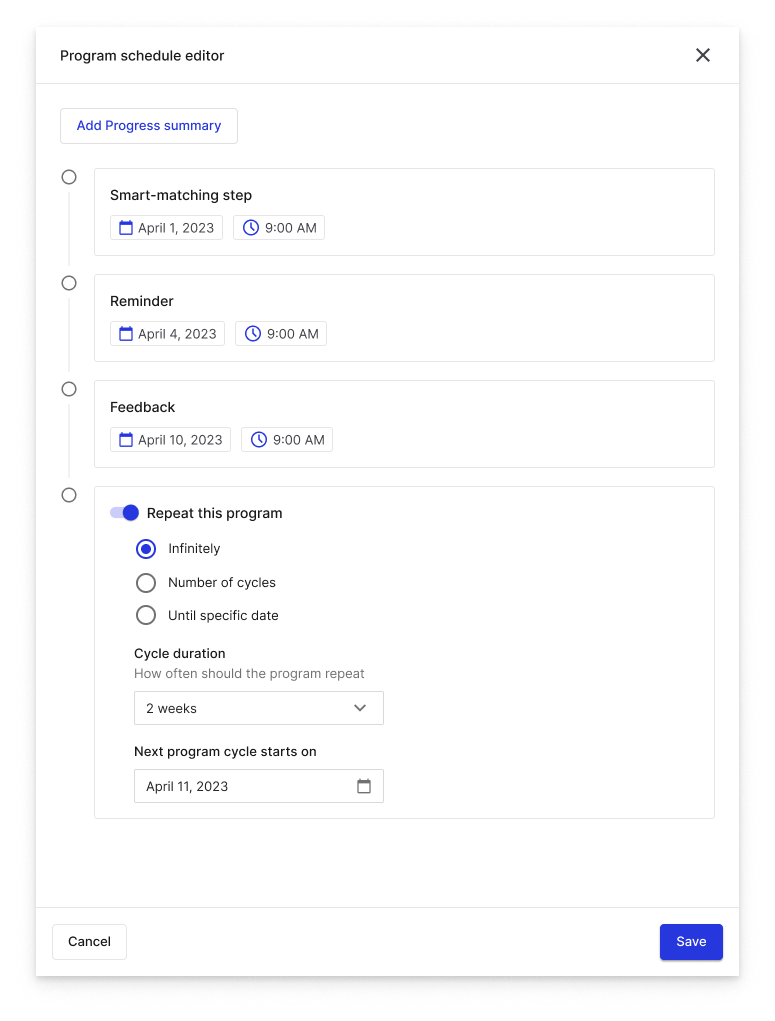
Repeat this program toggle was added into the normal mentorship user experience to let it be used as a networking program
Key Design Decisions:
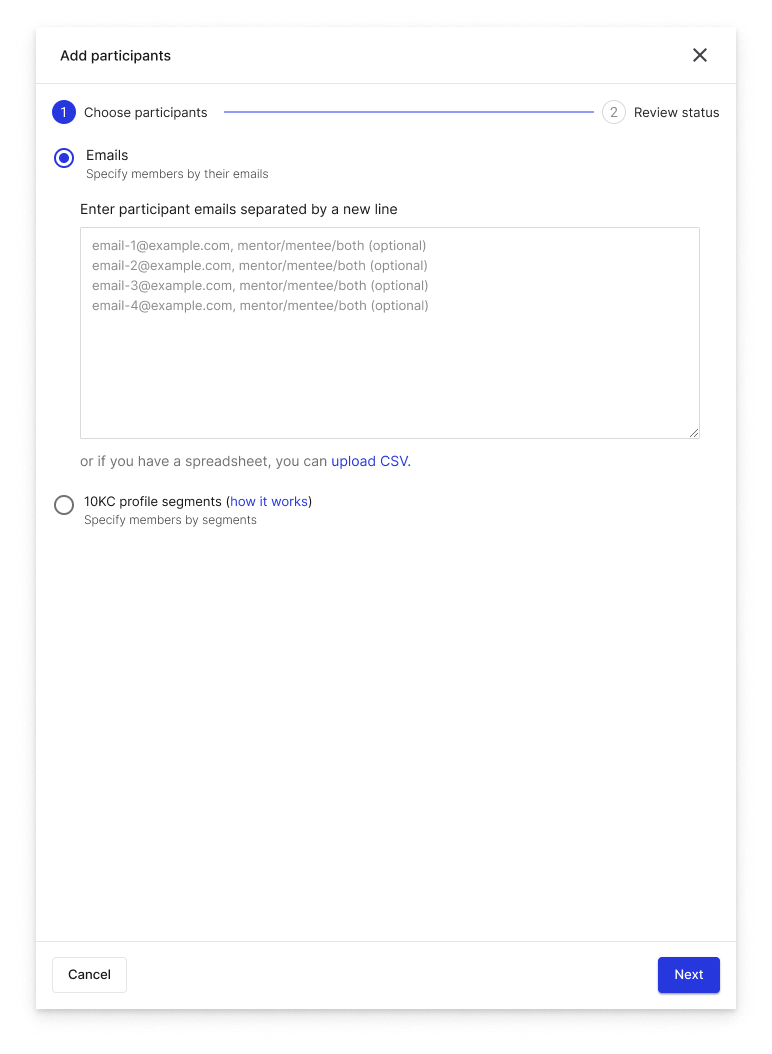
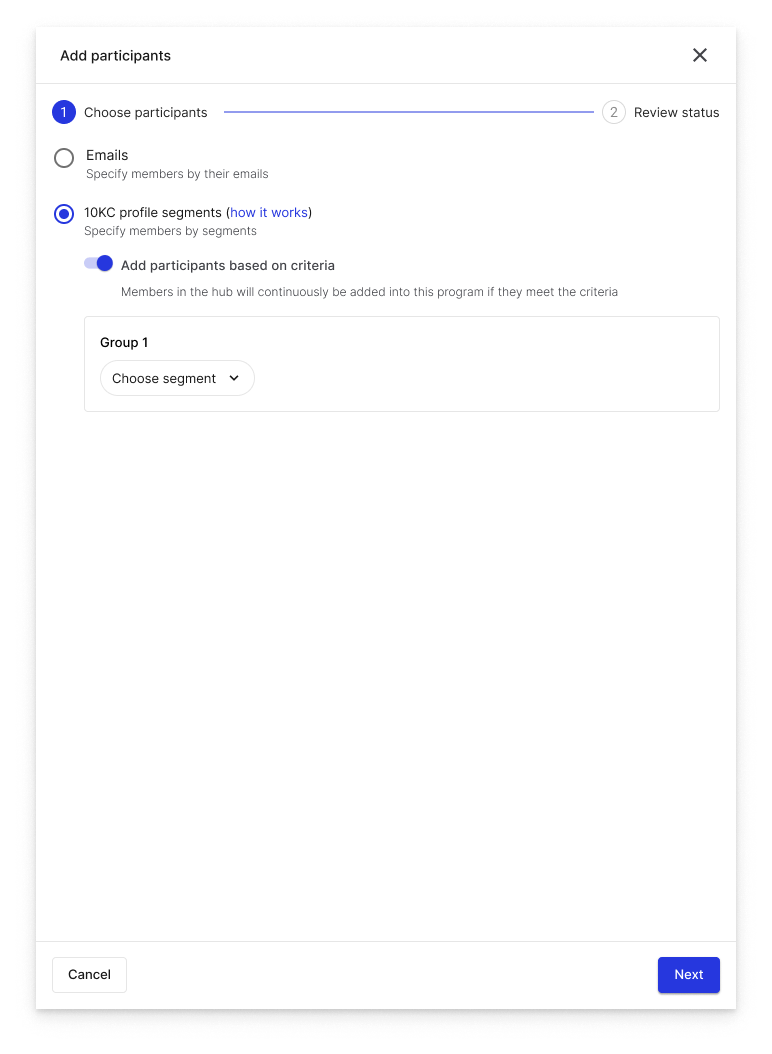
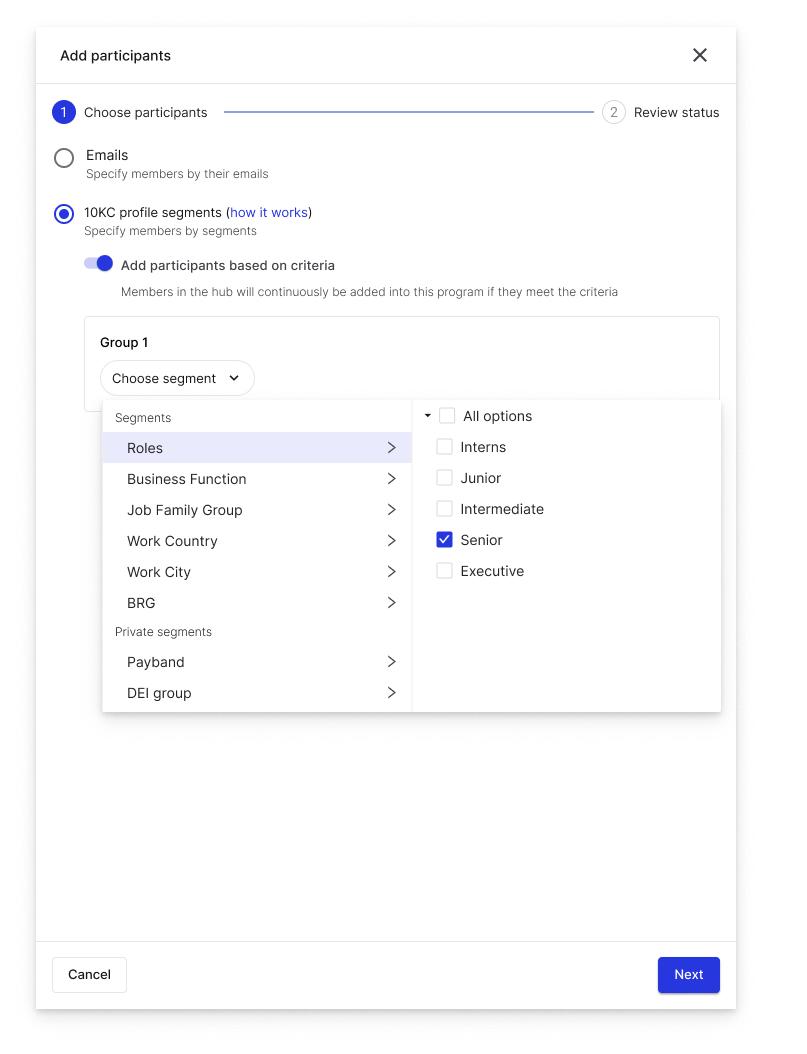
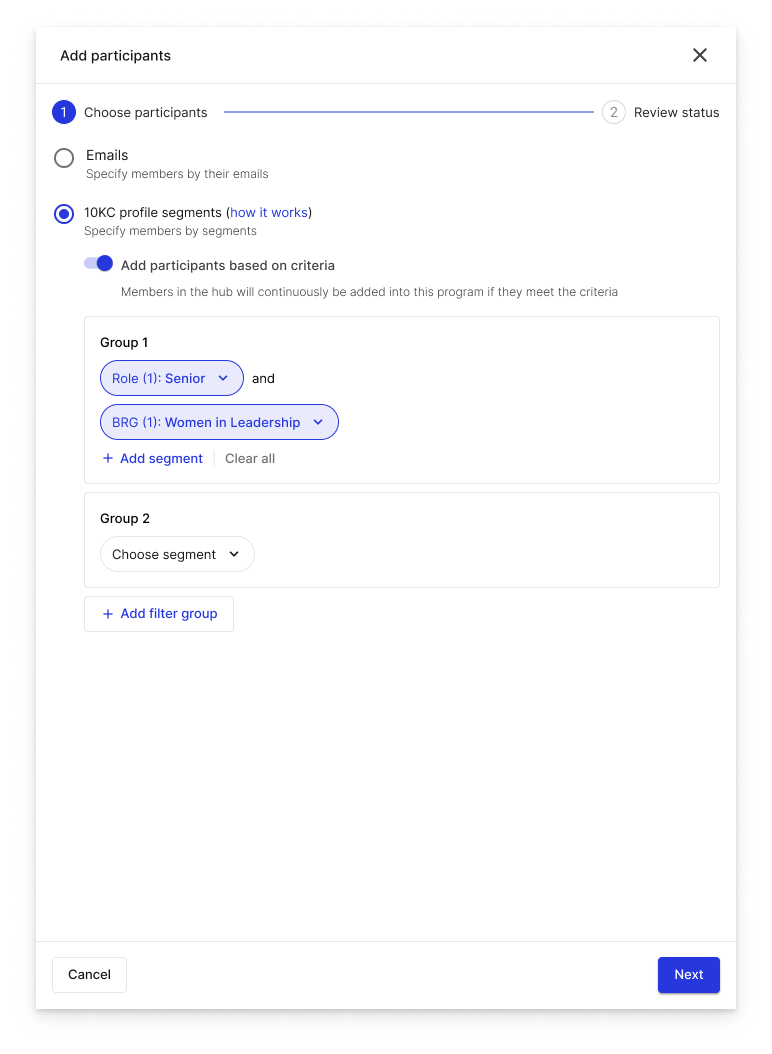
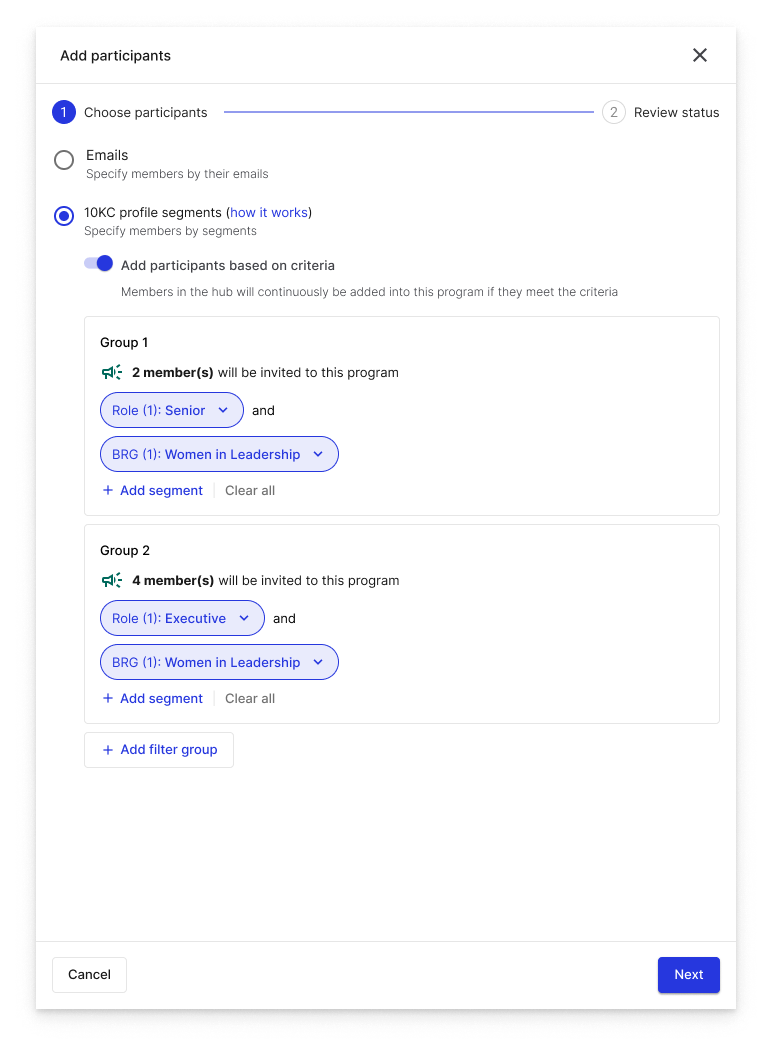
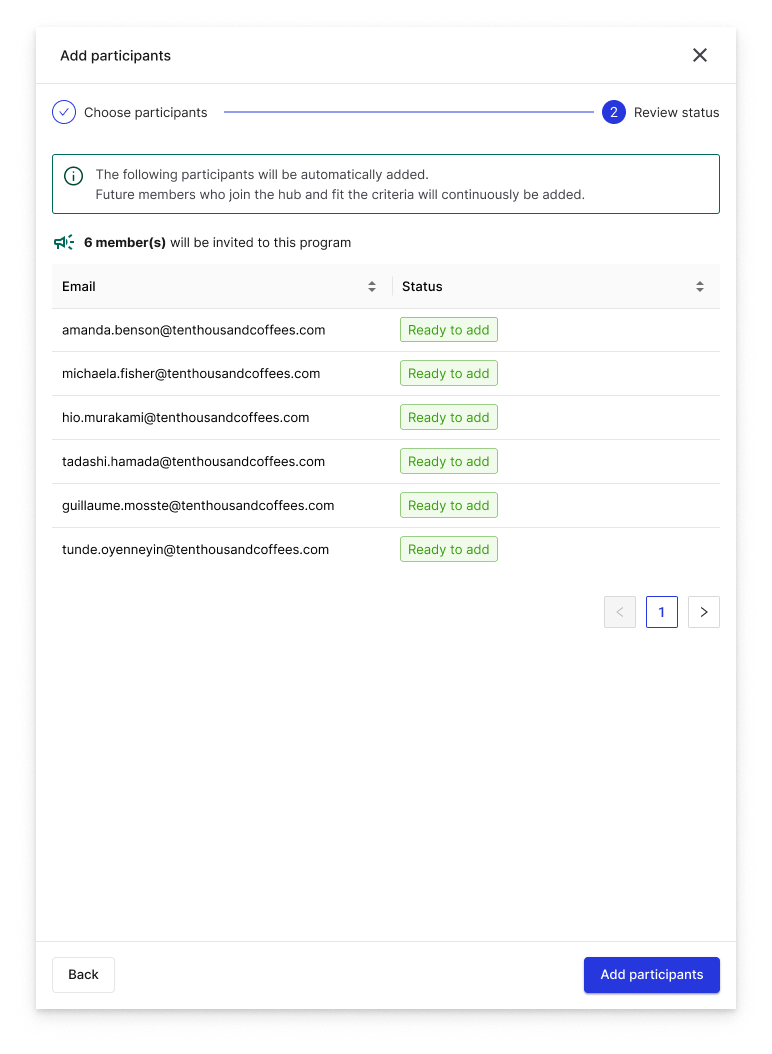
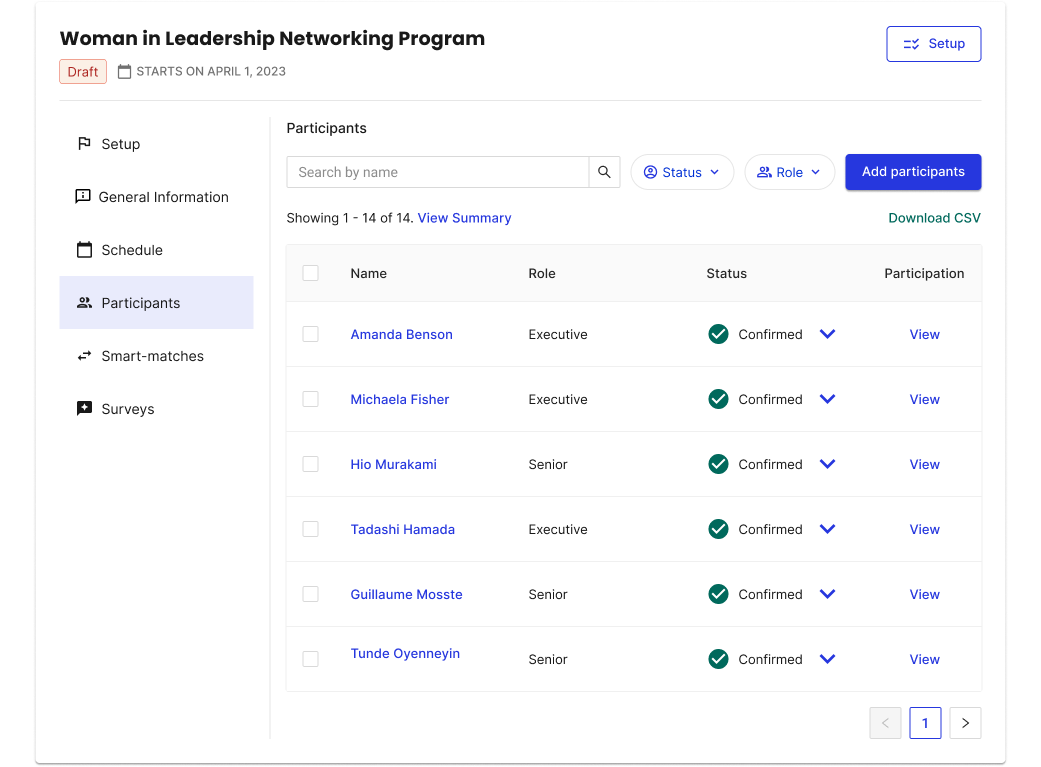
The Hybrid Drawer: I integrated networking settings into the Mentorship drawer. This allowed Admins to toggle "Networking Logic" (automated pairings) within a UI they already trusted.
High-Fidelity Documentation: Because the timeline was so aggressive, I maintained "living" Figma files. This allowed our developers to begin back-end implementation on finalized logic while I was still polishing the micro-interactions.
Logic Simplification: I translated complex technical constraints (like Hub-specific filtering) into simple, human-readable toggles.
Outcomes & Impact
The Result: The client was not only retained but was so impressed by the speed of delivery that they became a primary case study for our sales team.
The Numbers:
1,000+ Seats Secured: 100% renewal of a major enterprise account.
Scalability: What started as a "one-off" fix was integrated into the core 10KC product offering for all future enterprise clients.
CSM Sentiment: Following multiple user testing sessions, the CSM team reported that the solution was so intuitive it required "near-zero" re-education for the client admins.
Final Reflection: This project taught me that at the senior level, design isn't just about pixels, it's about business survival. By balancing technical constraints with user needs, we saved a multi-million dollar relationship and evolved the product's DNA in the process.